
Memento Mori
Love on the threshold of death

Valentine’s Day, Transfiguration, Presidents’ Day, Shrove Tuesday, Ash Wednesday… It seems that every day in the last week has brought its own nuance to what would otherwise be ordinary. But even our ordinary days aren’t ordinary, are they? Each holds a new wonder to behold, a new death to die. Our task, it would seem, is to embrace them as they come.
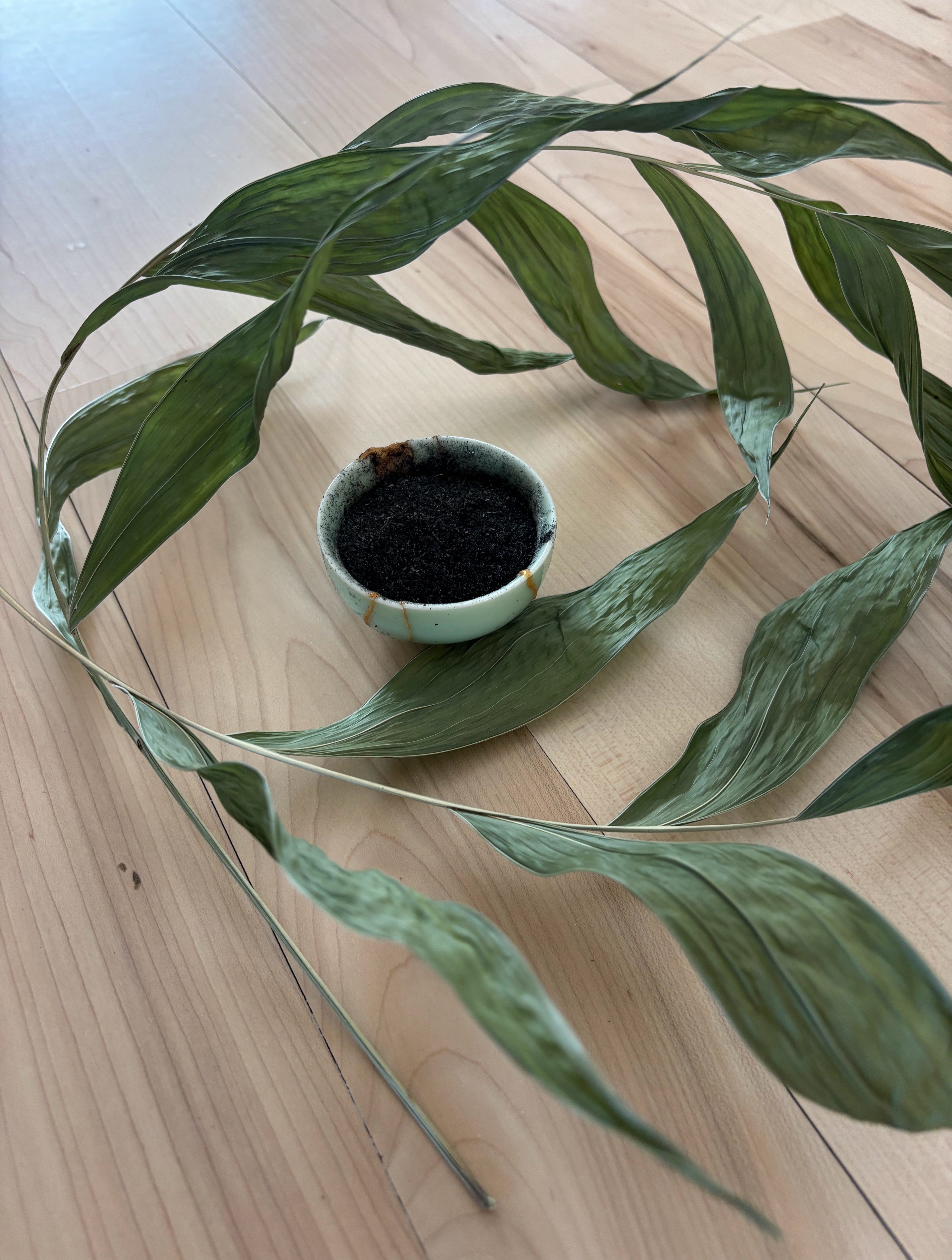
Today is Ash Wednesday, when so many are marked with the sign of the cross in palm ash, reminded of the curse spoken over Adam, naked and ashamed in the garden:
By the sweat of your brow
you will eat your food
until you return to the ground,
since from it you were taken;
for dust you are
and to dust you will return.1
Your daily moments will be tinged with death; your eating, your working, the new life you bring into the world, the way you will depart from it, relationships with the land, with each other, with the One by whom and for whom you were made, all marked with pain and suffering and the constant temptation to turn from instead of toward… And these words nestled between the promise of the snake crusher to come2 and the right now covering only Love could provide. I imagine Adam and Eve, and all of us in them, held in the gardener’s hands, seeds plucked from one garden and planted in the yet emptiness of what would become another. The curse is spoken, whispered, over humanity like seeds of the garden to come as they are pressed into the darkness of the soil. “You’re going to have to die, to break and split open, to struggle as you grow toward the light that is strong enough to shine through the soil and stir the life within. When you wake from that slumber you will find me there, walking with you again and still in the garden we will share forever.”
Like children leaving the home on their own for the first time, they carry home with them. It’s all they know. The dailiness no longer easy, they learn to work and toil, foraging food in foreign fields, caring for each other in the ways they were accustomed to being cared for. In their exile they grow old and, as they do, they grow home. It’s not perfect, and it’s not exactly what they came from, but it is an expansion of the garden as they can imagine it here. It is Shrove Tuesday pancakes in a dorm room, and Ash Wednesday at someone else’s church. It is the echoes of Eden east of there, homes and gardens and songs in Babylon.
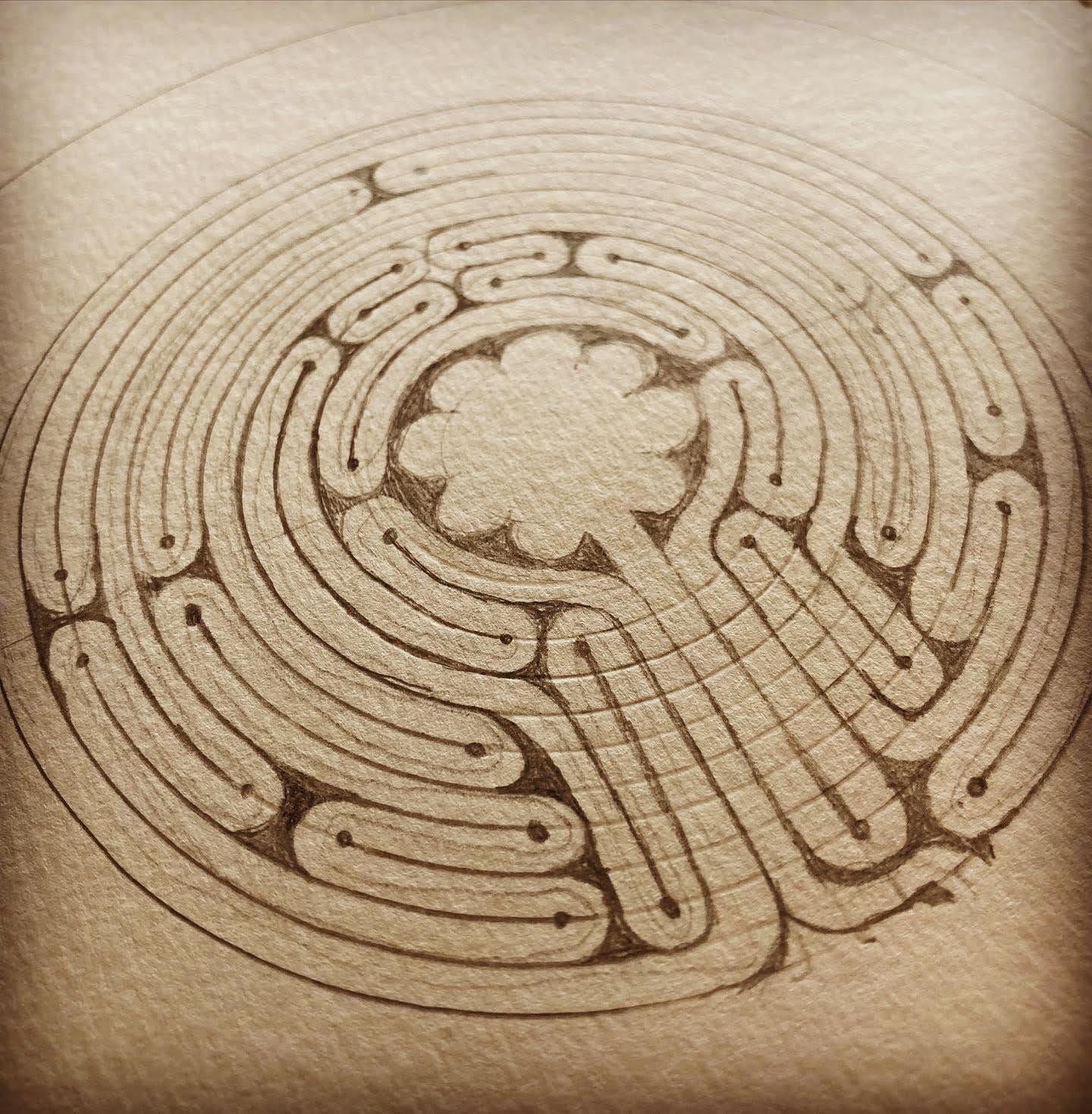
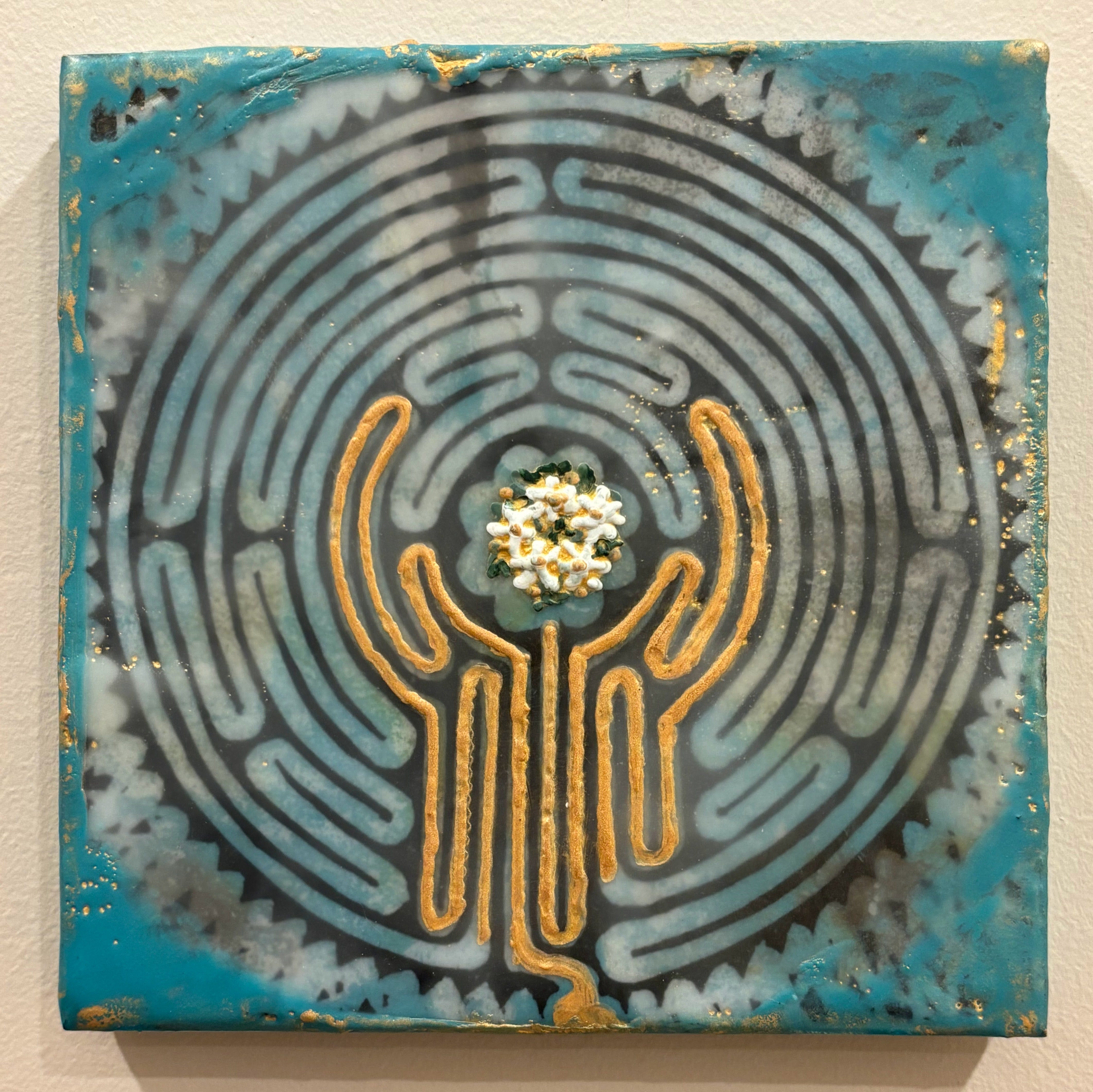
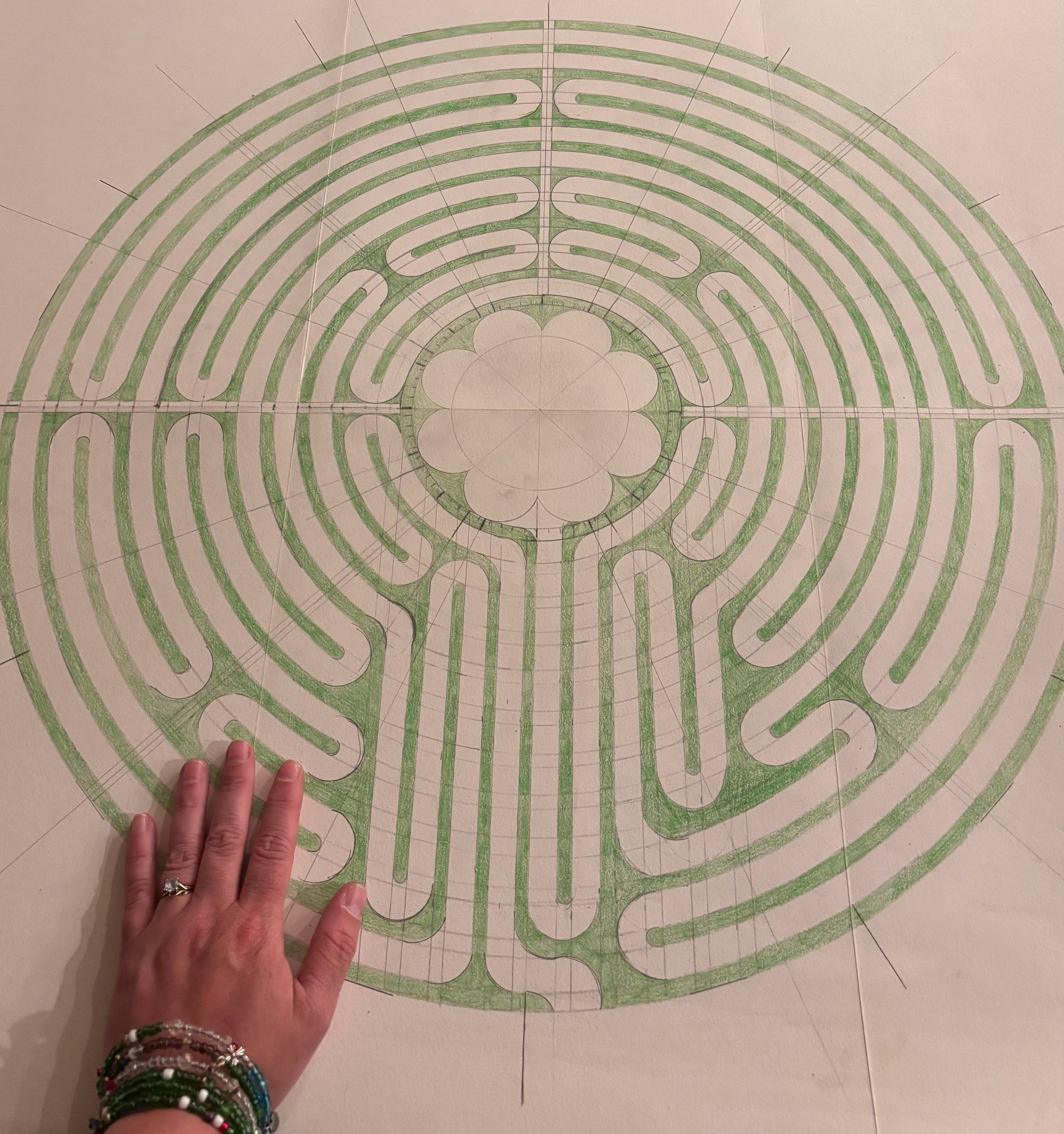
Four years ago I was sitting in the quiet of the sanctuary on the Saturday before Palm Sunday when my brain began to trace a shape. Over and over and over it followed the same winding path as I prayed. Eventually, my attention shifted to the route it followed and I discovered it to be a labyrinth, the shape of a space my feet had never walked. Still unable to release my brain from its grasp, I drew it out when I got home: concentric rings interrupted by two hands cradling a garden at the center.
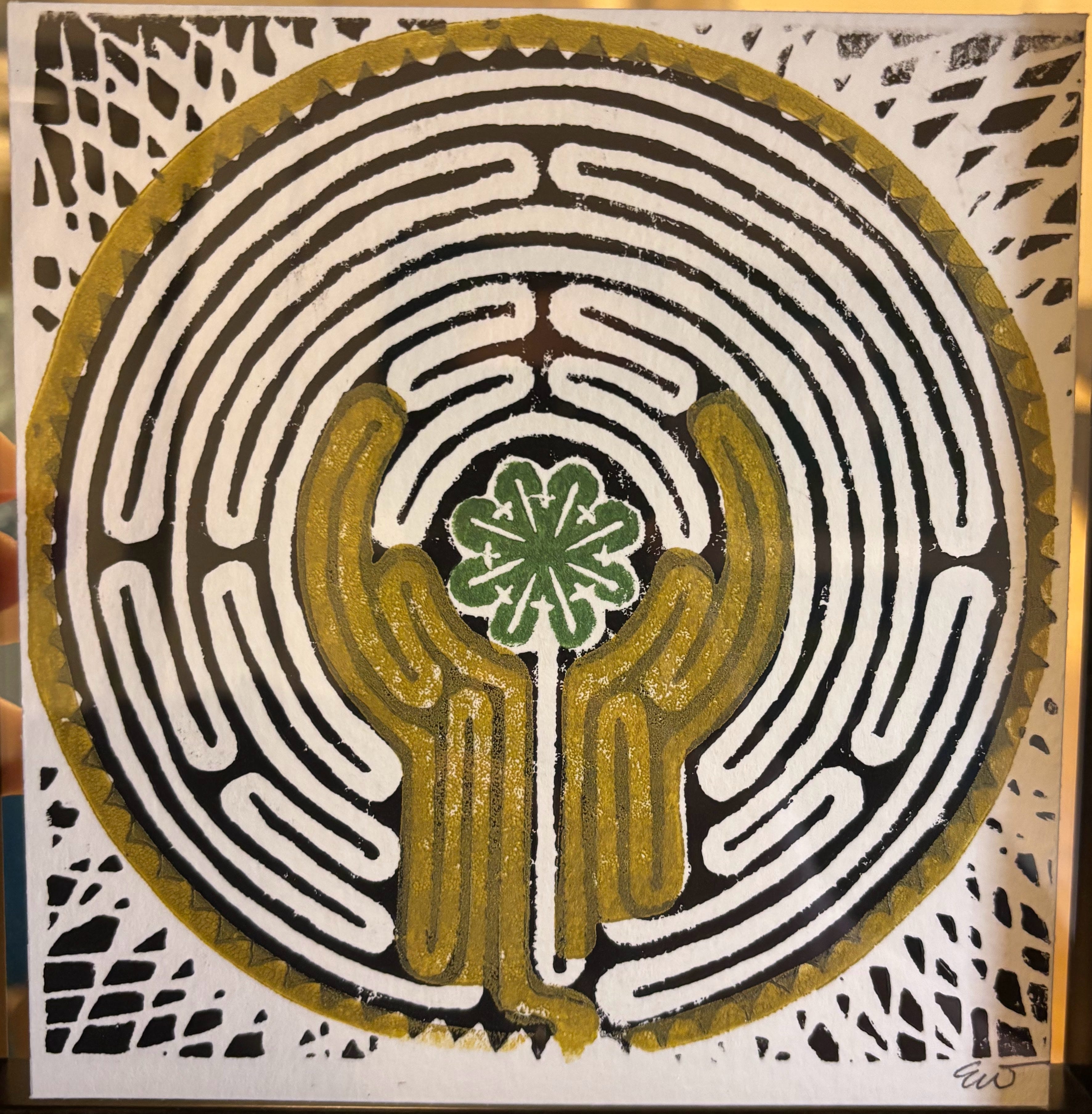
If you’ve been here for a bit, you’ll likely recognize this labyrinthine design; it surfaces time and time again, inviting me to wind my way to the center to pray, all of my wanderings held by the One who is my beginning and my end. It hangs on the wall in several rooms of my house, ever beckoning me to rest at the center, walking in the garden in the cool of the day with the One by whom and for whom I am made.
In one season of Lent, I was meditating on Mary’s experience in the garden, encountering Jesus as gardener after seeing two angels in the empty tomb, one at the head and one at the foot of the slab where they had laid Jesus’ body.3 The golden hands of the labyrinth became angels on either side and the garden in the center the tomb, suddenly compressing the images of God’s presence, life, and death into one. The mercy seat, the empty tomb, and the garden— all one invitation into life with the living God! Love, meeting me right there are the threshold of death.
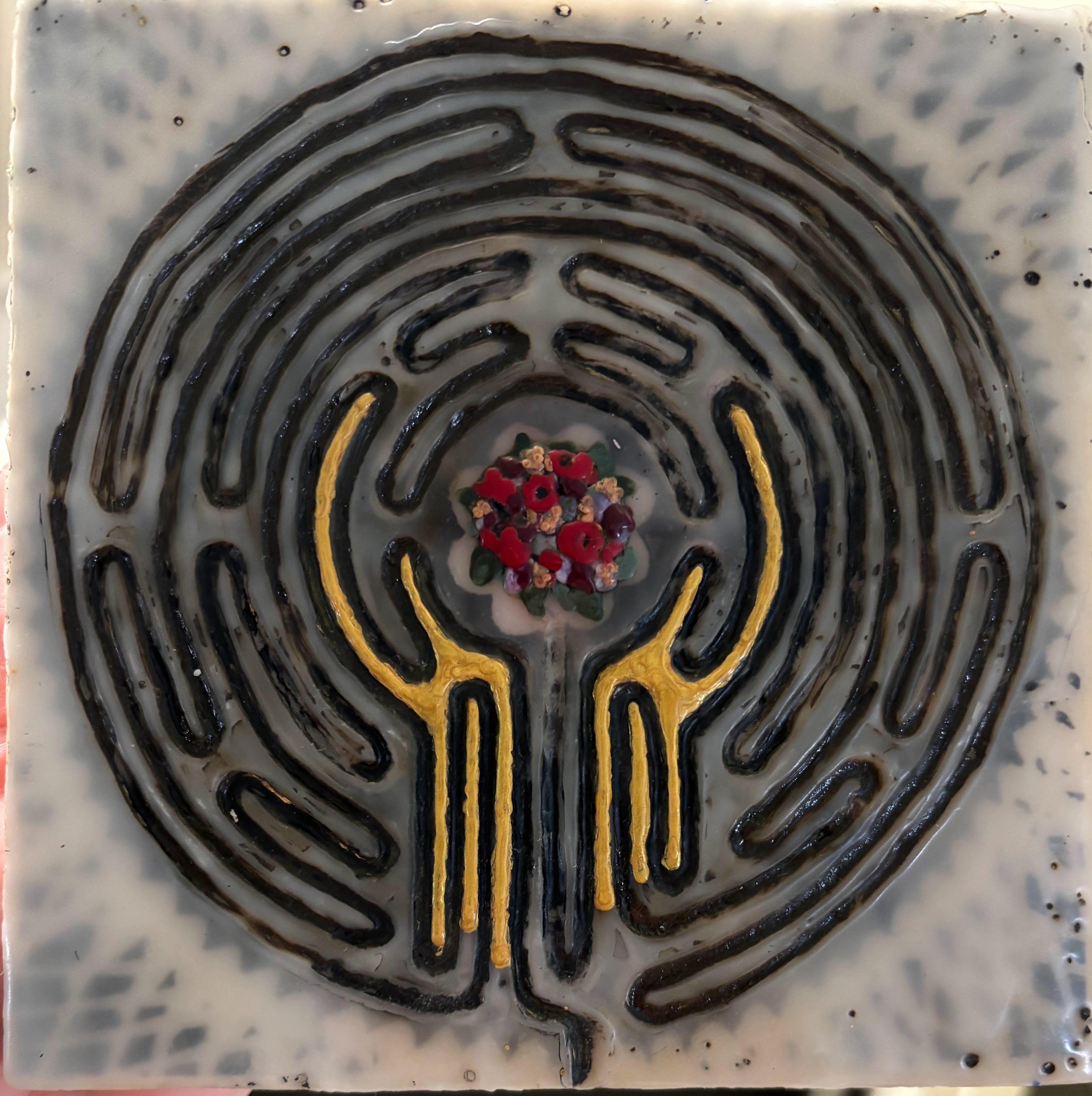
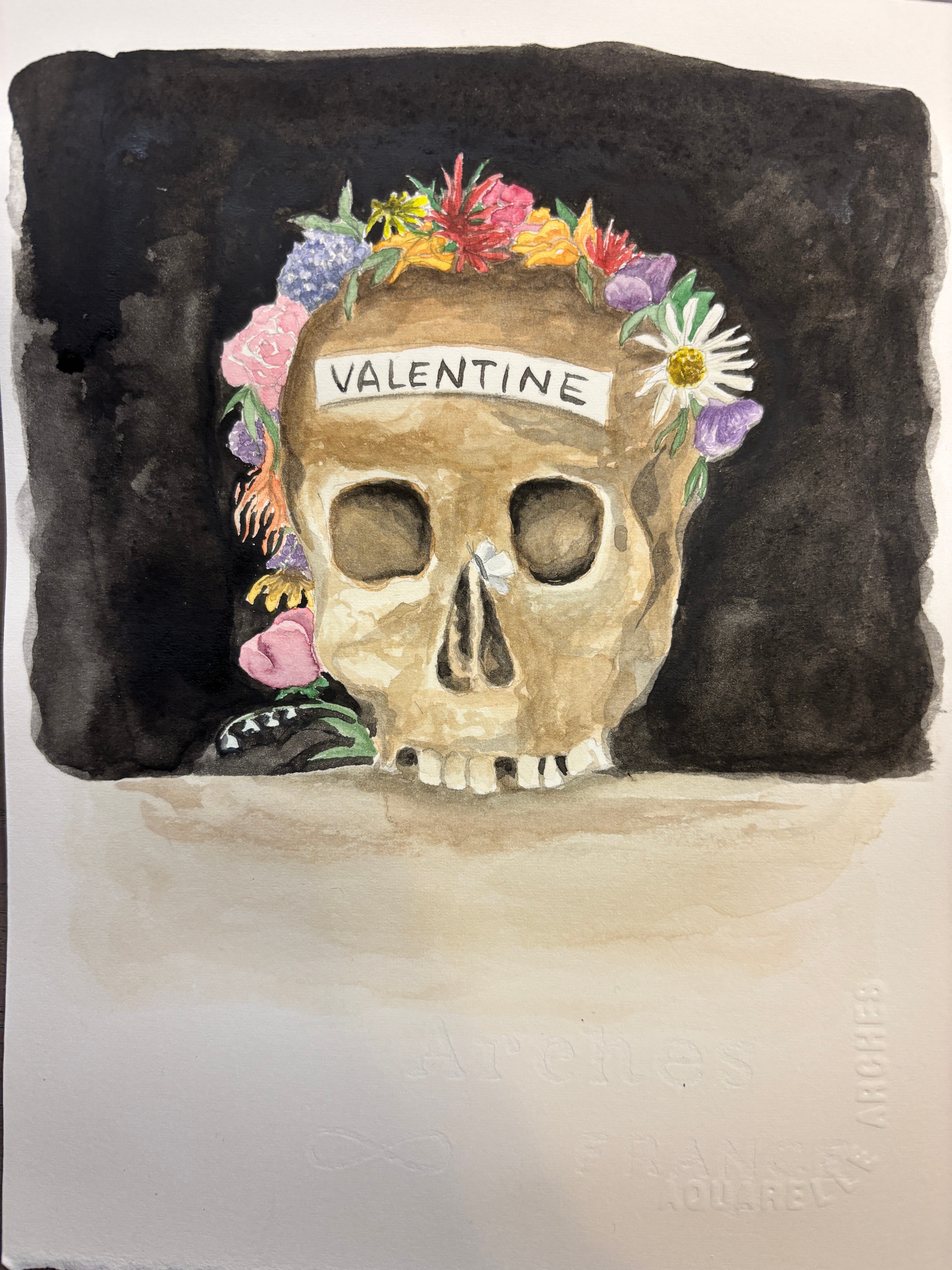
Ash Wednesday follows pretty close on the heels of Valentine’s Day this year, which is not necessarily uncommon, but is also not something that I usually ponder. We’re not much for Valentine’s Day. We’re a little jaded with the price hikes on flowers and the expected gifts, so we usually just do our own thing at a time when everyone else isn’t. It’s cheaper, and dinner reservations are easier to come by. But I realized this year that I don’t actually know much about St. Valentine, so I took the opportunity to fall down that particular rabbit hole. As it turns out, there’s not a whole lot known about him for sure, but a few stories have been circulated over the centuries. Generally, he is reported to be a clergyman who was executed by the Roman Emperor Claudius II in 270 A.D. after being imprisoned for performing wedding ceremonies in secret for Christians. Claudius II had made marriage illegal for young men in an attempt to boost army recruitment. His remains are housed in Rome: a skull wearing a flower crown. As I sat with this juxtaposition on Valentine’s Day— love and war, beauty and death— I painted a memento mori:
And tonight at our Ash Wednesday service, we heard the words of Psalm 103 spoken over us:
He forgives all my sins
and heals all my diseases.
He redeems me from death
and crowns me with love and tender mercies.The Lord is like a father to his children,
tender and compassionate to those who fear him.
For he knows how weak we are;
he remembers we are only dust.
Our days on earth are like grass;
like wildflowers, we bloom and die.
The wind blows, and we are gone—
as though we had never been here.
But the love of the Lord remains forever
with those who fear him.4
Love, on the threshold of death. I think I’ll add these verses to the bottom of the painting and keep it framed on my desk, a way to “keep death always before me” as Benedict says. This daily life will not go on forever, but the love of the Lord will, and we in it. My daily moments will be tinged with death; my eating, my working, the new life I bring into the world5, the way I will depart from it, relationships with the land, with each other, with the One by whom and for whom I were made, all marked with pain and suffering and the constant temptation to turn from instead of toward… And somehow this death is nestled between the loving hands of the snake crusher who has come and the covering only Love could provide.
A Song: Deathbed
Each week in February Tophouse is releasing a new song. If you’re not yet familiar with Tophouse, I suggest you go listen to them right now. Last week’s new release has already become my Lenten theme song. These lyrics are why. It’s another memento mori, but with a catchy tune so it gets stuck in your head:
There’s a hustle in the culture, there’s a stone at which I grind
I’ve been spinning wheels looking for an edge I hope to find
In a race that’s never ending, even though I keep on pretending that it does
Now I’m picking up the pieces to the puzzle that I’ve solved
So that I can then collect them and put them back inside the box
And in tomorrow’s boredom, I can spread them on the floor and start again
Stuck in minutiae with nothing to do but complain
To all of my friends
Details are cool, they won’t be in the room when it’s time
To make up and tuck in
To my deathbed
A Poem: Wasteland
I’ve got a few poems in our church’s family resource for Lent. Here is one of them:
When you wake up to the wasteland
make haste man, and grow
something good, something real
from the seeds that you sow.
This is night, not a fight,
so don’t reach for your bow,
grab a light— an arrow will only show
where to go, but you are to stay
in this waste with your vision
for what it will be,
not escape with derision.
These people are your people,
this place is your home—
You did not choose it?
You’re not alone! But this is the lot
you’ve been given in life.
Don’t look back with longing
like this salty wife! You wanted
a garden, an Edenic rapture,
I gave you a field, now you complain
that you’re captured?
Have you ever considered
this wasteland’s your own?
That it’s barren and empty because
you haven’t grown
anything here to make a garden?
You just stomped on the soil,
watching it harden. The lease
you could do is make wishes, blow seeds,
but you mowed them all down,
declaring them weeds. Now what
will crack open your compacted heart?
When you wake up to the wasteland
make haste man, and start.
Genesis 3:19
I love this language from Kevin DeYoung’s The Biggest Story.
John 20
Psalm 103:3-4, 14-17
This evening I watched as a two month old baby was marked with ashes and spoken over with the words of the curse. It nearly undid me. Just a week or so ago I was speaking my own promise alongside the congregation to love, pray, and care for this baby as he was dedicated to the Lord. Love and death, just breaths apart.
Beautiful! I love this, and the richness of the symbolism in your labyrinth design!
“Make haste man, and start” - so good, Elizabeth!